
Cannabis concentrates have taken the industry by storm, offering potent experiences in compact forms. At Citi Roots, our Princeton and Plainsboro customers frequently ask about the differences between shatter and wax – two of the most popular concentrate options on our shelves. Each offers unique textures, potency profiles, and consumption experiences that appeal to different users.
Shatter vs Wax: Key Differences & Uses
This guide breaks down everything you need to know about these powerful cannabis extracts, from how they’re made to how to enjoy them. Whether you’re a concentrate connoisseur or curious about trying them for the first time, understanding the distinctions between shatter and wax will help you make the best choice for your cannabis journey.
What Are Cannabis Concentrates?
Cannabis concentrates are potent extractions created by removing and collecting the most desirable compounds from the cannabis plant. These products contain significantly higher levels of cannabinoids (like THC and CBD) and terpenes than traditional flower, often reaching potency levels of 60-90% THC compared to flower’s typical 15-25%.
The extraction process involves separating the valuable trichome the tiny, crystal-like structures on cannabis plants that contain most of the plant’s cannabinoids and terpenes from the plant material. This is accomplished through various methods, including solvent-based extractions using butane, propane, CO2, or ethanol, as well as solventless methods like ice water extraction.
At Citi Roots, we offer a carefully curated selection of high-quality concentrates, including both shatter and wax varieties, sourced from reputable producers who prioritize safety and potency.
Shatter: The Glass-Like Concentrate
What Exactly Is Shatter?
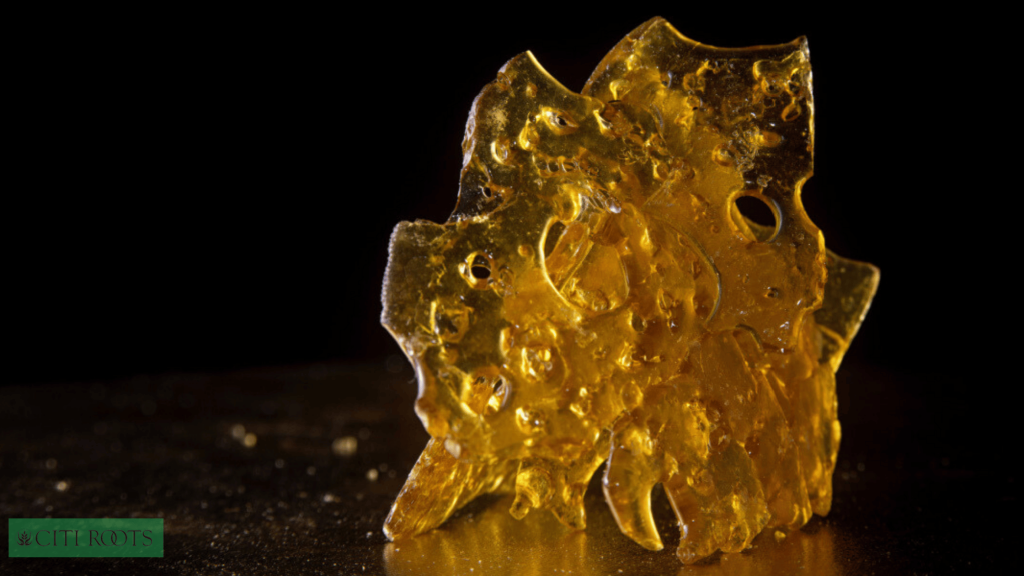
Shatter is a cannabis concentrate named for its glass-like appearance and tendency to shatter when broken apart. This translucent, amber-colored concentrate resembles hard candy or thin panes of glass. Its unique texture results from specific processing methods that maintain the extract’s molecular alignment.
The Production Process
Shatter is typically produced using a hydrocarbon solvent extraction method, most commonly butane hash oil (BHO) extraction. Here’s a simplified breakdown of how shatter is created:
- Cannabis plant material is packed into a tube or container
- Liquid butane is passed through the material, dissolving the cannabinoids and terpenes
- The butane-cannabinoid solution is collected
- The solution undergoes purging in a vacuum oven at specific temperatures
- The extract is left undisturbed during purging, allowing it to maintain its clear, glass-like structure
The key to creating shatter lies in minimal agitation during the purging process and precise temperature control. This careful handling preserves the extract’s molecular alignment, resulting in its characteristic transparency and brittle texture.
Cannabinoid and Terpene Profile
Shatter typically contains very high THC concentrations, often ranging from 70-90%. Due to the high temperatures used during production, some terpenes may be lost in the process, potentially resulting in slightly less aromatic profiles compared to other concentrates. However, high-quality shatter can still retain impressive terpene levels, especially when produced with care.
Shelf Stability and Storage
Shatter offers excellent shelf stability compared to many other concentrates. Its hard, stable structure resists degradation from heat, light, and oxygen better than softer concentrates. For optimal preservation:
- Store in an airtight, silicone or glass container
- Keep in a cool, dark place
- Avoid exposure to heat, which can cause melting and texture changes
- Use a clean dabbing tool to prevent contamination
With proper storage, high-quality shatter can maintain its potency and consistency for up to a year.

Wax: The Creamy, Versatile Concentrate
What Exactly Is Wax?
Wax refers to a category of cannabis concentrates with an opaque, non-transparent appearance and a texture resembling beeswax or ear wax. Unlike shatter’s glass-like consistency, wax is softer, ranging from creamy and smooth (budder) to crumbly and dry (crumble). This variety of textures falls under the broader wax category.
The Production Process
The basic extraction method for wax is similar to shatter, typically using butane or propane as solvents. The critical difference occurs during the post-extraction phase:
- Cannabis plant material undergoes solvent extraction, similar to shatter
- The collected solution is purged in a vacuum oven
- The solution is agitated or whipped during purging
- This agitation disrupts the molecular alignment, creating air pockets
- The result is an opaque, wax-like substance with varying consistencies
The agitation during purging is what creates wax’s distinctive opacity and texture. Different temperatures and levels of agitation produce various wax consistencies, from creamy budder to dry, crumbly wax.
Cannabinoid and Terpene Profile
Wax concentrates typically display THC levels comparable to shatter, ranging from 60-80% or higher. However, wax often preserves terpenes better than shatter due to potentially lower processing temperatures. This enhanced terpene preservation can result in more complex flavor profiles and aromatic experiences.
Shelf Stability and Storage
Wax generally has a shorter shelf life than shatter due to its increased surface area and softer consistency, which makes it more vulnerable to degradation from light, heat, and oxygen. For best results:
- Store in airtight glass or silicone containers
- Keep in a cool, dark place, preferably refrigerated
- Use within 3-6 months for optimal flavor and potency
- Handle with clean tools to prevent contamination
Side-by-Side Comparison: Shatter vs. Wax
When choosing between shatter and wax, consider these key differences:
Potency
Both concentrates offer impressive potency, but shatter tends to have slightly higher THC percentages on average, sometimes reaching up to 90%. Wax typically ranges from 60-80% THC, though these numbers can vary based on the specific product and producer.
Flavor and Aroma
- Wax: Generally preserves more terpenes due to processing methods, resulting in richer flavors and more complex aromas
- Shatter: May lose some terpenes during production but still delivers potent effects and clean flavor profiles
Ease of Handling
Shatter:
- More difficult for beginners to handle due to its brittle nature
- Can be challenging to portion precisely
- Requires tools to break apart and handle effectively
- Less likely to stick to tools but can fly off when breaking
Wax:
- Easier to manipulate and portion
- Can be scooped with various tools
- Less likely to create waste during handling
- Better for beginners due to its malleable consistency
Versatility of Use
Both concentrates can be consumed using similar methods, including:
- Dabbing with a dab rig or e-nail
- Vaporizing with concentrate-compatible vaporizers
- Adding to flower in joints or bowls (though wax is generally easier for this purpose)
- Using in certain edible recipes (requiring decarboxylation)
Wax holds a slight advantage in versatility due to its easier handling and ability to be used in more consumption scenarios without special tools.
Consumption Methods & Tools
Essential Equipment for Concentrates
To enjoy shatter or wax properly, you’ll need specialized equipment:
For Dabbing:
- Dab rig (a water pipe designed for concentrates)
- Nail or banger (quartz, ceramic, or titanium)
- Carb cap to regulate airflow
- Dabbing tool for handling the concentrate
- Torch (butane preferred) or e-nail
For Vaporizing:
- Concentrate-compatible vaporizer
- Some portable vaporizers have special pads or chambers for concentrates
Dosing Considerations
Cannabis concentrates are significantly more potent than flower, requiring careful dosing:
- Start with a very small amount (a “rice grain” sized portion or smaller)
- Wait several minutes between doses to assess effects
- Gradually increase as tolerance develops
- Consider THC percentage when determining dose size
For medical patients or those sensitive to THC, selecting products with balanced cannabinoid profiles or adding CBD concentrates can help moderate effects.

Medical vs. Recreational Considerations
Benefits for Medical Patients
Cannabis concentrates offer several advantages for medical users:
- Rapid onset of effects (typically within seconds to minutes)
- Potential for precise dosing once familiar with the product
- Reduced inhalation volume compared to smoking flower
- Higher concentrations of specific cannabinoids for targeted effects
- Option for vaporization rather than combustion
For patients managing severe or acute symptoms, the intensity and immediate effects of concentrates can provide quick relief.
Recreational Enjoyment
Recreational users often appreciate concentrates for:
- The ritual and experience of dabbing
- Exploring complex flavor profiles
- Strong, immediate effects
- Reduced odor compared to smoking flower
- Potential for longer-lasting effects than traditional consumption methods
New Jersey Regulations
In New Jersey, cannabis concentrates are legal for both medical and adult-use consumers, though with some restrictions:
- Purchase limits apply based on equivalent weight to flower
- Products must be purchased from licensed dispensaries like Citi Roots
- All products undergo testing for potency and contaminants
- Consumers must be 21+ for adult-use or have a valid medical card
Making Your Selection at Citi Roots
At Citi Roots near Princeton and Plainsboro, our knowledgeable budtenders specialize in helping customers navigate the world of cannabis concentrates. When visiting our dispensary, you’ll find:
- A diverse selection of both shatter and wax concentrates
- Products from trusted New Jersey producers
- Various strain-specific options for targeted effects
- Concentrates across a range of price points to suit different budgets
- Necessary accessories for proper consumption
Our staff can recommend specific products based on your experience level, desired effects, and consumption preferences. We take pride in offering personalized guidance to ensure you find the concentrate that best meets your needs.

Conclusion
Both shatter and wax offer compelling benefits for cannabis concentrate enthusiasts. Shatter’s glass-like consistency and exceptional shelf stability make it ideal for those who prioritize longevity and potency, while wax’s easier handling and potentially richer flavor profile appeal to those seeking versatility and aromatic experiences.
Your choice between these concentrates ultimately depends on your personal preferences, experience level, and intended use. At Citi Roots, we’re committed to helping our Princeton and Plainsboro area customers discover their ideal cannabis products through education and personalized service.
Visit our dispensary to explore our premium concentrate selection and speak with our knowledgeable budtenders about which option might be right for you. Whether you’re new to concentrates or an experienced consumer, we’re here to enhance your cannabis journey with quality products and expert guidance.
Frequently Asked Questions
Q. 1 Which is stronger, shatter or wax?
A. Both can reach similar potency levels, but shatter typically averages slightly higher THC percentages, sometimes reaching 90%. However, the difference in effects often comes down to terpene preservation rather than just THC content.
Q. 2 How long do cannabis concentrates last?
A. With proper storage, shatter can maintain quality for up to 12 months, while wax typically stays fresh for 3-6 months. Always store in airtight containers away from heat, light, and moisture.
Q. 3 Are shatter and wax legal in New Jersey?
A. Yes, cannabis concentrates are legal in New Jersey for adults 21+ and medical patients. They must be purchased from licensed dispensaries and consumed in private spaces in accordance with state regulations.
Q. 4 What’s the best way to store concentrates?
A. Store in airtight glass or silicone containers in a cool, dark place. Refrigeration can extend shelf life, particularly for wax products. Always use clean tools when handling to prevent contamination.
Q. 5 Do concentrates have a smell when consumed?
A. Yes, but the odor is typically less persistent than smoked flower. Vaporized concentrates produce a cannabis aroma that dissipates more quickly than smoke, making them somewhat more discreet for consumers concerned about lingering smells.